India is moving rapidly from early EV adoption to infrastructure-led electric mobility at scale. By 2026, the country’s EV charging ecosystem is expected to shift from fragmented rollout to structured, policy-backed maturity, with implications far beyond its borders.
Electric two-wheelers, buses, and commercial fleets are already mainstreaming EV adoption. The next phase-charging accessibility, grid integration, and cost efficiency-will define whether India becomes a global benchmark for inclusive electrification.
Why Charging Infrastructure Matters
Charging infrastructure is the decisive factor in EV adoption. In India, its importance is amplified by dense urban living, cost-sensitive consumers, and rapid non-metro adoption. The country’s focus on distributed, affordable, and grid-aware charging offers valuable lessons for emerging and developed markets alike.
What Will Change by 2026
Policy-Driven Expansion
- Dense urban charging networks
- Chargers every 25 km on highways
- Strong public–private partnerships
- State-led EV infrastructure mandates
Highways and Cities Go Electric
- Charging at fuel stations and rest areas
- Smart chargers in offices, malls, and parking
- App-enabled discovery and payments
By 2026, EV charging in major Indian cities will be routine, reliable, and largely invisible to users.
India’s Structural Advantage: Light Electric Mobility
Unlike Western markets, India’s EV growth is led by two- and three-wheelers, enabling:
- Faster infrastructure rollout
- Lower grid stress
- Quicker return on investment
This model positions India as a reference market for Africa, Southeast Asia, and Latin America.
AC vs DC Charging: A Balanced Model
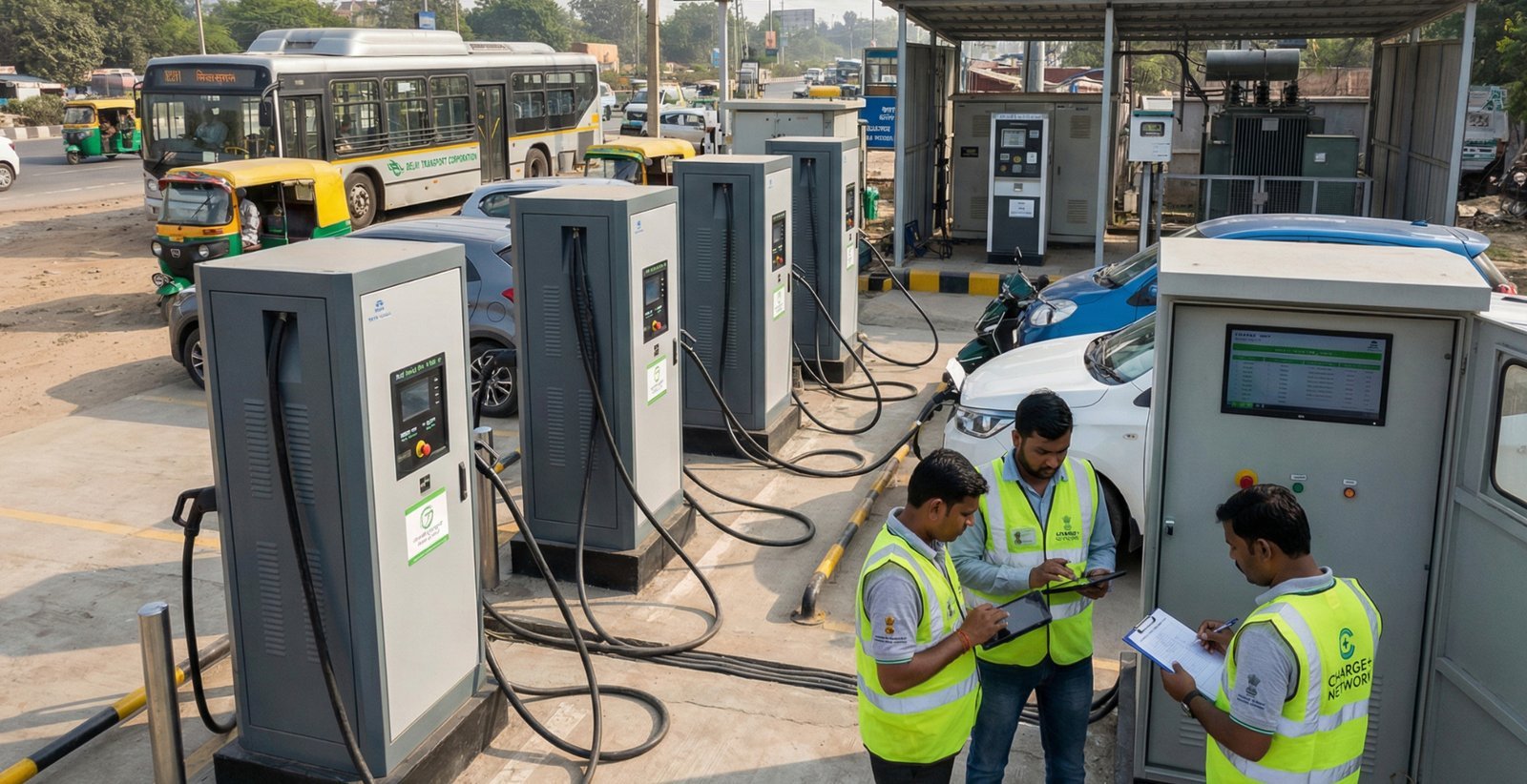
- AC charging will dominate mass adoption due to lower costs and grid compatibility
- DC fast charging will expand selectively for highways and fleets
This pragmatic balance avoids overinvestment while supporting scale.
Grid, Renewables, and Smart Charging
By 2026, power utilities will play a central role through:
- Dedicated EV tariffs
- Off-peak incentives
- Renewable-linked charging
- Smart load management
EV charging and clean energy integration will progress in parallel.
Executive Outlook
By 2026, India’s EV charging infrastructure will not just support domestic growth-it will shape global EV deployment strategies. Its ability to scale charging across dense cities, highways, and smaller towns makes India a living blueprint for the future of electric mobility.
For global executives, India is no longer catching up-it is helping define how EV ecosystems scale worldwide.
Read about: How China Built the World’s Largest EV Charging Network