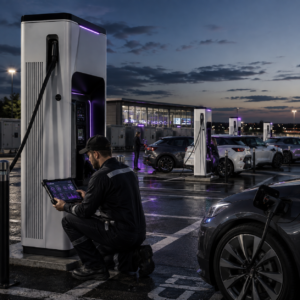

For commercial fleets, installing charging infrastructure is only one part of the electrification investment.
The larger operational challenge is coordinating vehicle requirements with available electrical capacity, charging schedules and electricity costs.
The growing integration of fleet charging with energy-management systems reflects this shift. PowerFlex and The Mobility House announced a partnership focused on fleet electrification and energy-management solutions.
For fleet operators, the commercial question is increasingly how to manage charging capacity efficiently as vehicle numbers increase.
Fleet Charging Creates a Capacity Management Problem
Commercial vehicles often return to a depot within relatively narrow operating windows.
If multiple vehicles begin charging simultaneously, electricity demand can increase sharply. Meeting that demand may require additional electrical infrastructure, higher-capacity connections or increased demand-related charges.
Managed charging provides an alternative approach.
Instead of allowing every vehicle to draw maximum power simultaneously, charging can be scheduled according to operational requirements.
Factors can include:
● Vehicle departure time
● Required state of charge
● Route distance
● Charger availability
● Depot electrical capacity
● Electricity tariffs
● Fleet priorities
This allows available electrical capacity to be allocated according to operational need.
More Chargers Are Not Always the Most Efficient Solution
Increasing charger numbers can provide additional capacity, but it also increases capital expenditure and can create additional electrical infrastructure requirements.
Energy management can improve the utilization of existing capacity before additional hardware is required.
For example, a depot with limited electrical capacity could prioritize vehicles scheduled for earlier departures while delaying charging for vehicles that remain parked for several additional hours.
The objective is not maximum simultaneous charging.
It is sufficient energy availability at the required departure time.
Electricity Costs Add Another Variable
The economics become more complex when electricity prices vary by time of day or when demand charges contribute materially to operating costs.
Charging schedules can potentially be coordinated with lower-cost periods while maintaining fleet requirements.
Where depots also have solar generation or stationary battery storage, charging can be coordinated with onsite energy resources.
This creates a broader optimization problem involving:
vehicles + chargers + electricity + storage + operating schedules. That is fundamentally different from managing chargers as standalone infrastructure.
Vehicle Readiness Is the Primary Operational Measure For fleet operators, charging infrastructure ultimately supports vehicle availability.
A low-cost charging strategy has limited value if vehicles are not sufficiently charged for their assigned routes.
Similarly, installing substantially more infrastructure than operationally necessary can increase capital expenditure without producing a proportional benefit.
The relevant objective is therefore to balance:
● Vehicle readiness
● Charging capacity
● Electricity cost
● Infrastructure investment
● Depot operating requirements
This balance becomes increasingly important as fleet electrification scales.
Charging Infrastructure Is Becoming Part of Depot Energy Management
The increasing integration of charging with energy-management systems suggests that fleet electrification decisions will increasingly involve both transportation and energy considerations.
Fleet operators will need to assess not only how many chargers are required, but also:
● When vehicles need energy
● How much power the depot can provide
● When electricity is most economical
● Whether storage can reduce peak demand
● How charging schedules interact with fleet operations
For larger commercial fleets, these considerations can materially affect the cost and operational reliability of electrification.
The central question is therefore no longer simply how much charging infrastructure a depot needs.
It is how effectively the available electrical capacity can support the fleet’s operating schedule.