Most of the EV charging industry still talks about chargers.
Utilities, fleet operators, and infrastructure investors are increasingly talking about load management.
That difference explains where the market is heading.
For years, competitive advantage in EV charging came from:
● deploying more chargers,
● expanding networks,
● and winning site locations.
Now a different problem is emerging.
As EV penetration rises, the real constraint is becoming grid capacity.
A highway fast-charging hub can consume as much electricity as a small industrial facility. Fleet depots are creating highly concentrated power demand in regions where distribution infrastructure was never designed for transportation electrification at scale.
This is changing the economics of charging infrastructure.
The next generation of charging companies will likely compete less on hardware and more on:
● energy management,
● demand response,
● battery integration,
● dynamic load balancing,
● and utility coordination.
Why Utilities Are Becoming Central to EV Charging
Historically, charging networks operated somewhat independently from utilities. That model is becoming harder to sustain.
Utilities increasingly want visibility into:
● charging demand spikes,
● fleet charging schedules,
● transformer loading,
● and distributed storage integration.
The reason is simple.
Unmanaged charging growth can create expensive grid upgrade requirements.
That is why smart charging software is becoming strategically important. Charging companies that can shift load, optimize charging windows, and integrate onsite storage may reduce infrastructure costs significantly.
In some cases, software may become more valuable than the charger itself.
Fleet Electrification Is Accelerating the Shift
Passenger EV charging gets most of the media attention.
Commercial fleets are where the infrastructure pressure is becoming serious. Large fleet depots require:
● predictable uptime,
● high-capacity charging,
● energy cost management,
● and operational reliability.
For logistics operators, electricity pricing volatility is becoming a business issue, not just a sustainability issue.
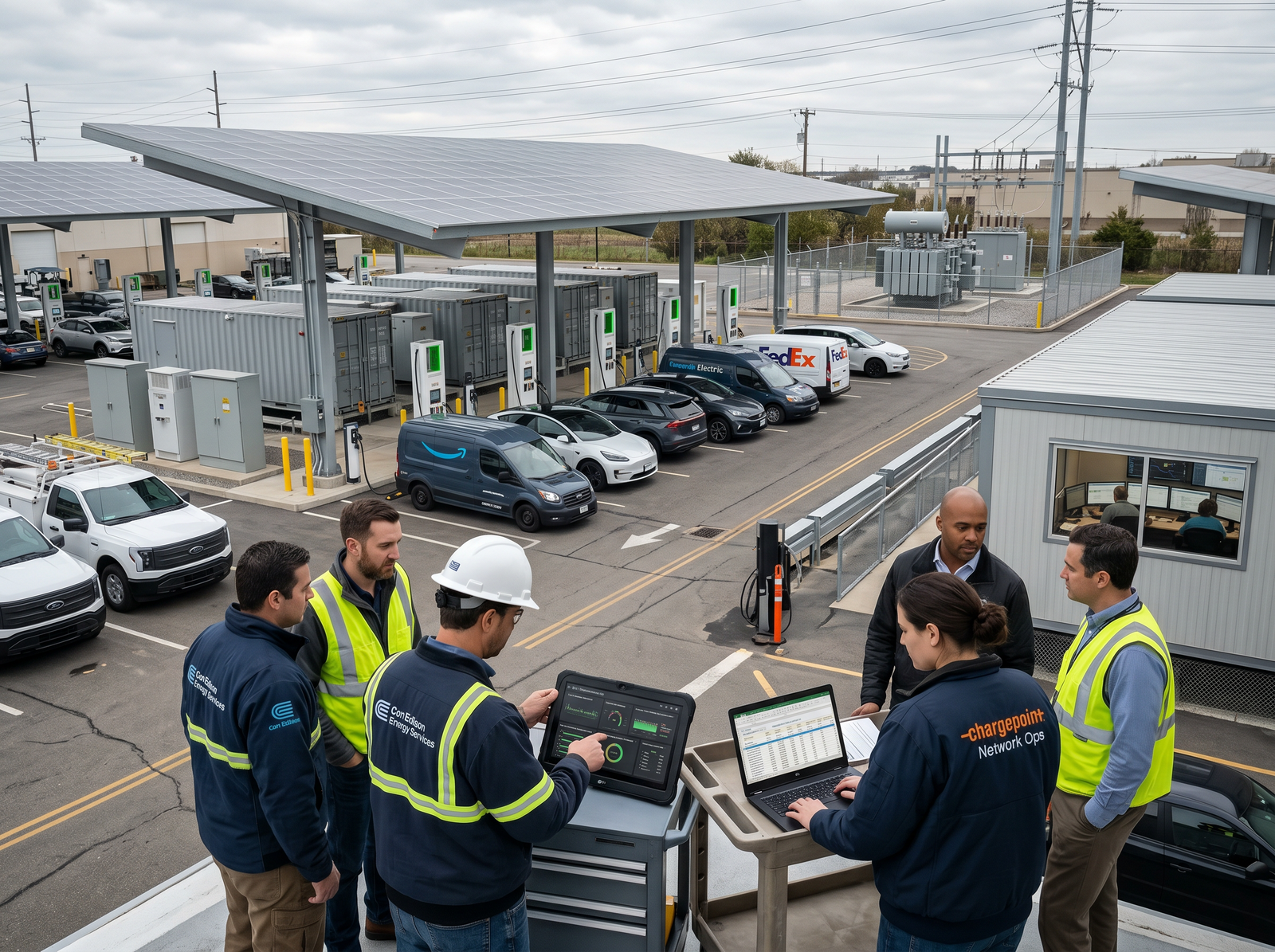
This is pushing charging providers toward integrated energy solutions that combine:
● charging hardware,
● onsite batteries,
● solar,
● load optimization,
● and utility partnerships.
The charging site is increasingly behaving like a distributed energy asset.
The Real Market Opportunity
The EV charging market is no longer just about installing equipment. It is becoming part of a larger electricity infrastructure transition.
That means future market leaders may not necessarily be the companies with the largest charger footprint.
They may be the companies that best manage:
● power flows,
● grid interaction,
● energy costs,
● and charging reliability at scale.
Because the future of EV charging is becoming deeply connected to the future of the grid itself.